

TL;DR: Milos is the Greek island that seasoned travellers keep going back to. With over 80 beaches shaped by millions of years of volcanic activity, a food scene far beyond its size, and a pace that Santorini and Mykonos left behind long ago, it delivers on every level. This complete Milos, Greece travel guide covers when to go, the best beaches, where to stay, where to eat, how to get around, and the practical tips that make the difference between a good trip and a great one.
Here’s something most people get wrong about Greece: they book Santorini, fight for the same caldera-view photos as ten thousand other tourists, and fly home thinking they’ve seen the best of the Cyclades.
They haven’t.
Milos sits in the southwestern corner of the island chain, and it plays by completely different rules. The beaches here aren’t just good. They’re genuinely unlike anything else in Europe. White volcanic rock formations that look like a moonscape. Sea caves you can only reach by boat. Sand that comes in red, orange, and sulfur yellow, depending on what minerals the lava left behind. I knew about Milos before I visited, and it still caught me off guard.
Whether you’re planning your first trip to Greece or your fifth, this guide covers everything you need to make your Milos trip one you’ll still be talking about years from now. If you’re also exploring spring 2026’s hottest destinations, Milos belongs near the top of your list.
What Makes Milos, Greece, So Special?
Milos is a volcanic Cycladic island with over 80 beaches shaped by millions of years of geological activity, and no two look the same. The volcanic origins of the island mean its sand and rock come in shades of white, red, orange, and yellow, depending on the minerals beneath the surface. Add in colourful fishing villages with candy-painted boathouse doors, some of the freshest seafood in the Aegean, and a crowd level that still feels manageable compared to the big-name islands, and you have one of Greece’s most complete travel experiences.
The island’s volcanic history goes back roughly 2 to 3 million years. According to the Smithsonian’s Global Volcanism Program, Milos sits along the Hellenic Volcanic Arc, the same geological alignment that includes Santorini and Nisyros. The most recent magmatic eruptions occurred around 90,000 years ago, which is why you get geothermal hot springs at Paleochori beach and the lunar rock formations at Sarakiniko.
There’s history here, too. The Venus de Milo, the iconic armless statue of Aphrodite, now in the Louvre in Paris, was discovered on this island in 1820 by a local farmer. A replica lives in the Milos Archaeological Museum in Plaka, which is worth an hour of your time. And the Catacombs of Milos, carved into soft volcanic rock near Klima around the 1st to 3rd centuries AD, are among only three early Christian catacomb sites in the world alongside Rome and the Holy Land.
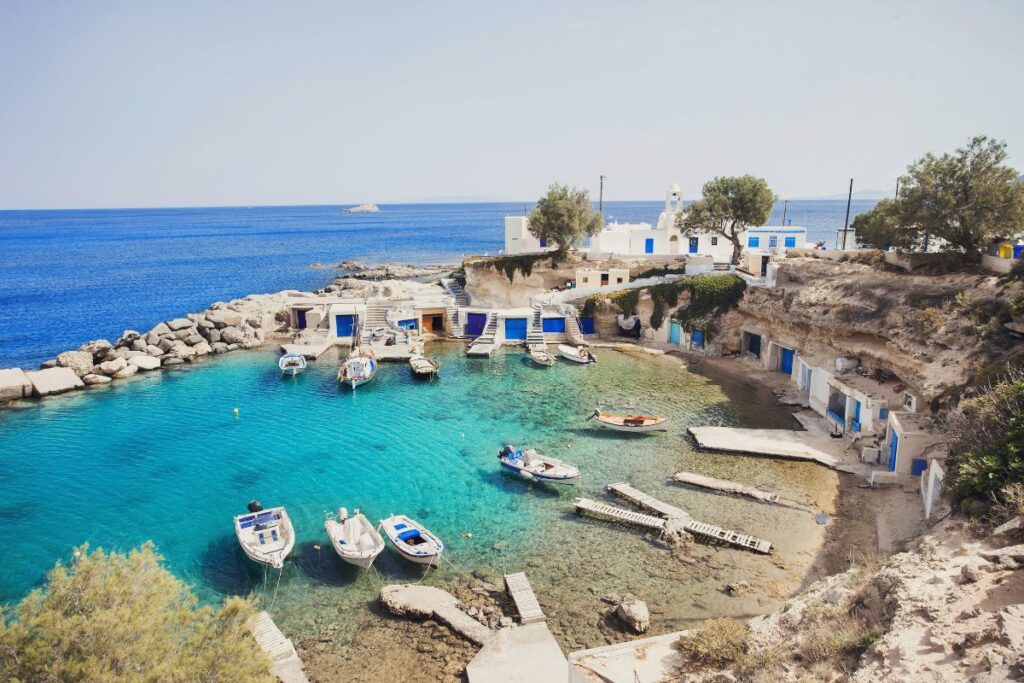
Then there are the syrmata: the colourful boathouses carved into the waterline rock in fishing villages like Klima, Mandrakia, and Firopotamos. Fishermen store their boats on the ground floor and live above. Each door is painted a different shade of the rainbow. These villages are some of the most photographed spots in the Greek islands, and they deserve every bit of attention they get.
When Is the Best Time to Visit Milos?
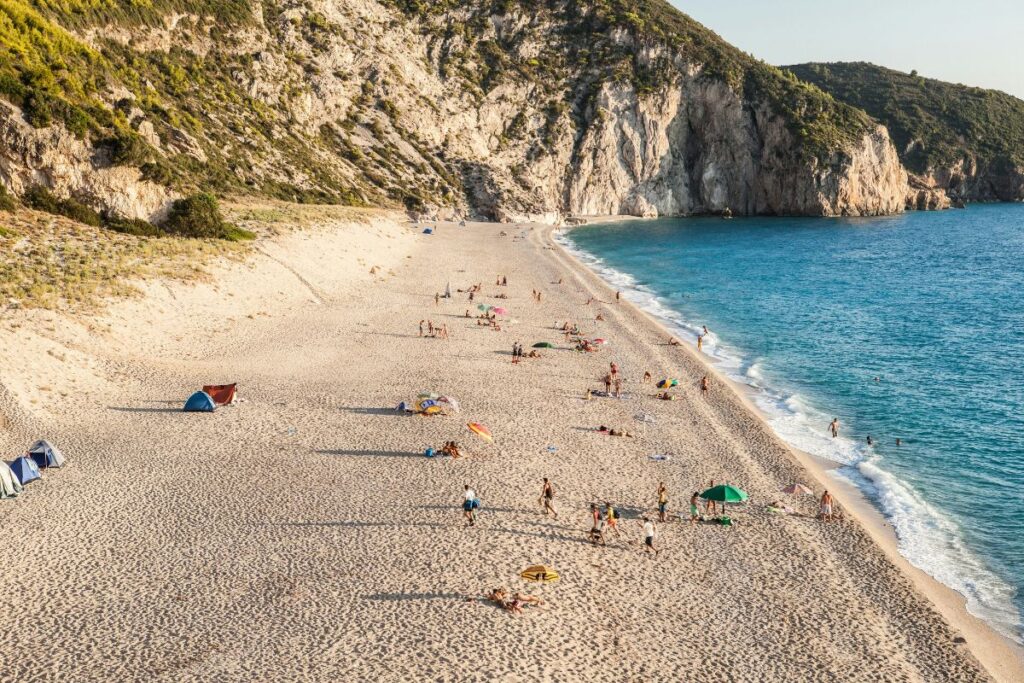
The best time to visit Milos is May through June or September through October. These shoulder months offer warm, swimmable water, fully open restaurants and hotels, and far fewer crowds than the July-August peak. Temperatures sit between 19°C and 25°C (66°F to 77°F), which is comfortable for both beach days and exploring on foot or by ATV. Prices are also noticeably lower than in high season, and accommodation is far easier to book.
Here’s a quick breakdown of what each season actually looks like:
May to June (sweet spot for first-timers)
Daytime temperatures in May rise to around 19°C to 22°C, the hills are still green with wildflowers from spring rains, and Sarakiniko isn’t yet packed with summer visitors. The sea is cool but swimmable by June. Most restaurants and boat tour operators are fully open. If this is your first time in Milos, May or early June is the answer.
July to August (peak season)
The beaches are at their busiest. Accommodation prices peak. The Meltemi winds, dry northerly gusts that blow strongest in July and August, can make north-facing beaches choppy and occasionally cancel boat tours to Kleftiko. That said, if July or August are your only options, Milos in high season still beats most other Greek islands. Book everything well in advance.
September to October (the insider’s pick)
September is the warmest the sea gets all year, after months of soaking up summer sun. The Meltemi calms down. Crowds thin noticeably. Prices drop. Many travellers who have been to Milos before specifically time a return trip for September because of this combination. October is quieter still, with some businesses starting to wind down toward the month’s end.
November to April (off-season)
Most tourist facilities close. The island gets cool, windy, and sometimes rainy. That said, Sarakiniko in the off-season is a different experience entirely: raw, deserted, and genuinely dramatic. A handful of local restaurants and small hotels in Adamas and Plaka stay open year-round for the brave souls who come looking for that.
How Do You Get to Milos, Greece?
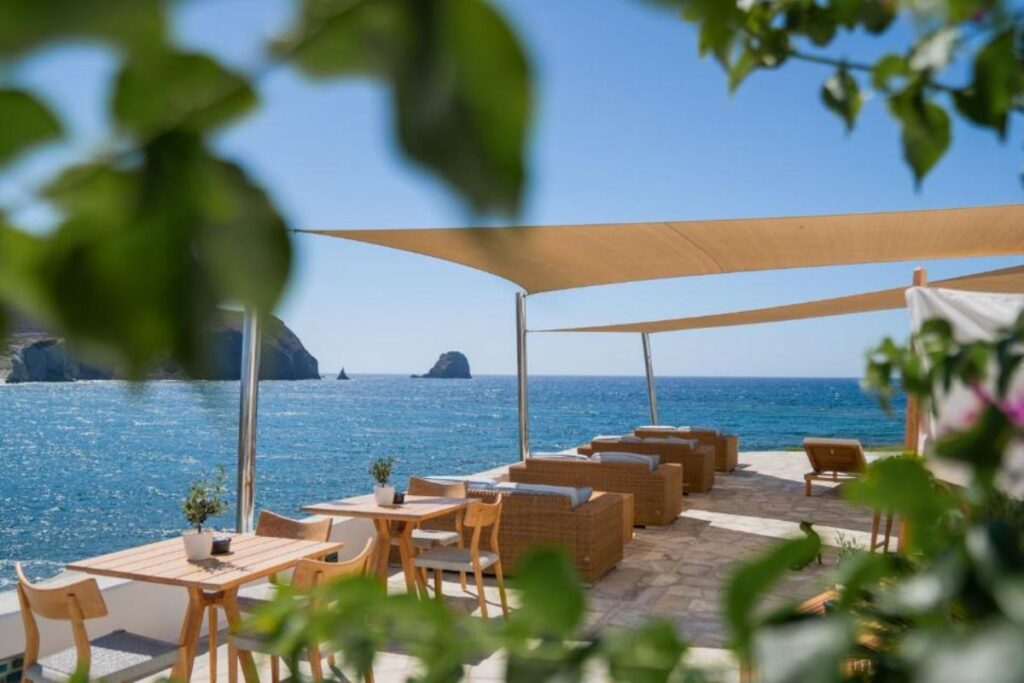
By air: The fastest way is a direct domestic flight from Athens International Airport to Milos Airport (MLO). The flight takes roughly 40 minutes, and both Sky Express and Olympic/Aegean operate the route, especially in summer. Note that Milos Airport is small, and wind conditions can cause delays or cancellations. If your international flight arrives late the night before, build in a buffer or overnight in Athens first.
By ferry: From Piraeus (Athens’ main port), ferries to Milos take anywhere from 2.5 hours on a high-speed vessel to around 7 hours on a conventional overnight ferry. Book your tickets through a platform like Ferryhopper, which shows all routes and operators in one place. The slower overnight ferries are cheaper and can be a smart choice if you’re on a budget. Milos is also well-connected by ferry to Santorini, Paros, Naxos, Sifnos, and the tiny island of Kimolos just next door.
Once you arrive, the main port is Adamas. From there, it’s a short taxi ride to most accommodations. Adamas, Plaka (the hilltop capital), and Pollonia (the quieter northern fishing village) are the three main bases. Where you stay shapes how your days feel, so that choice matters. More on that below.
What Are the Best Beaches in Milos?
Milos has over 80 beaches, and no two look alike. The four you absolutely cannot leave without visiting are Sarakiniko (the lunar moonscape in white volcanic rock), Kleftiko (sea caves and turquoise water accessible only by boat), Tsigrado (a hidden cove reached by rope and ladder), and Firiplaka (long, sandy, and family-friendly with towering red cliffs). Between those four, you get the full picture of what makes Milos one of the best beach destinations in Europe.
Here’s the fuller picture:
Sarakiniko
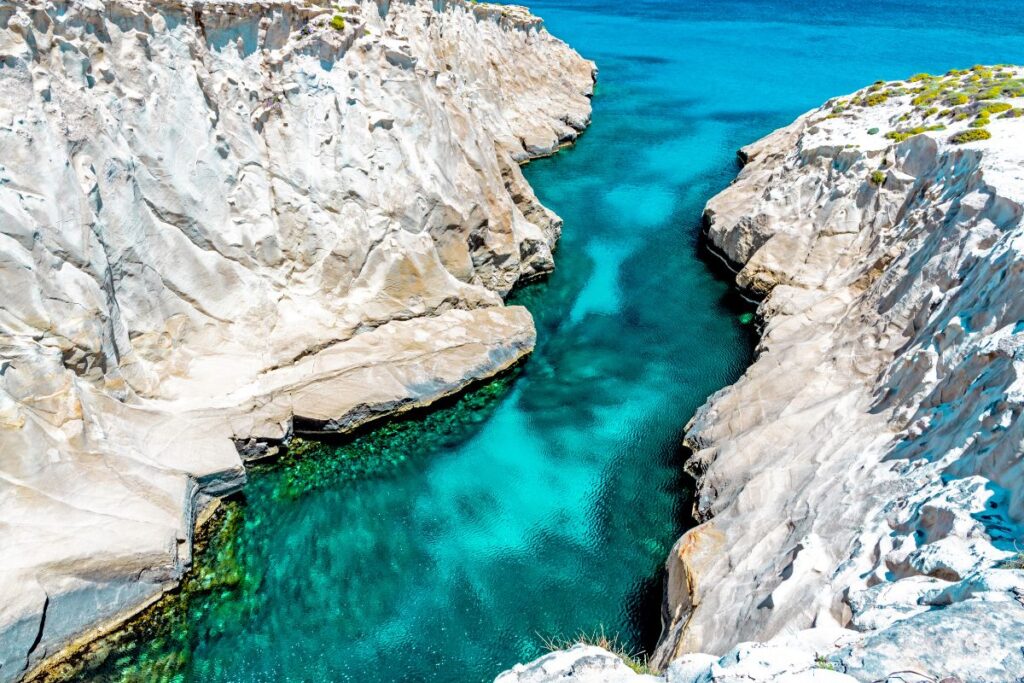
This is the one you’ve seen in photos, and it’s even more surreal in person. The white pumice rock formations were shaped by volcanic eruptions and millennia of wind erosion, and the result looks more like the surface of the moon than a Greek island. There’s a small sandy beach tucked into the formation and calmer swimming than the open rock. Arrive at sunrise or very early morning to have it to yourself. By 10 am in summer, it’s busy. There’s no shade and no facilities, so bring water, sunscreen, and something to eat.
Kleftiko
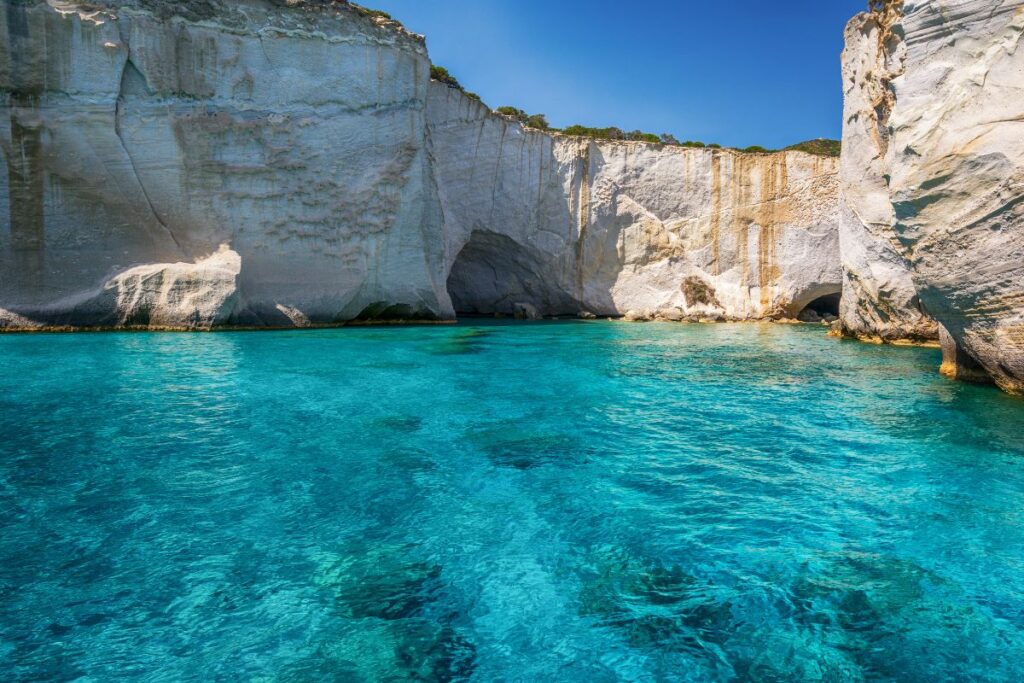
You can’t reach Kleftiko by road. It’s only accessible by boat, which is exactly what makes it worth it. Book a half-day or full-day boat tour from Adamas, and you’ll find sea caves, limestone arches, and water so clear you can watch fish below you from the deck. The caves glow an emerald green in afternoon light. The whole area has a pirate history: it was supposedly used as a hideout by Mediterranean pirates in centuries past. Book a tour from Adamas and confirm the night before that sea conditions allow the trip.
Tsigrado
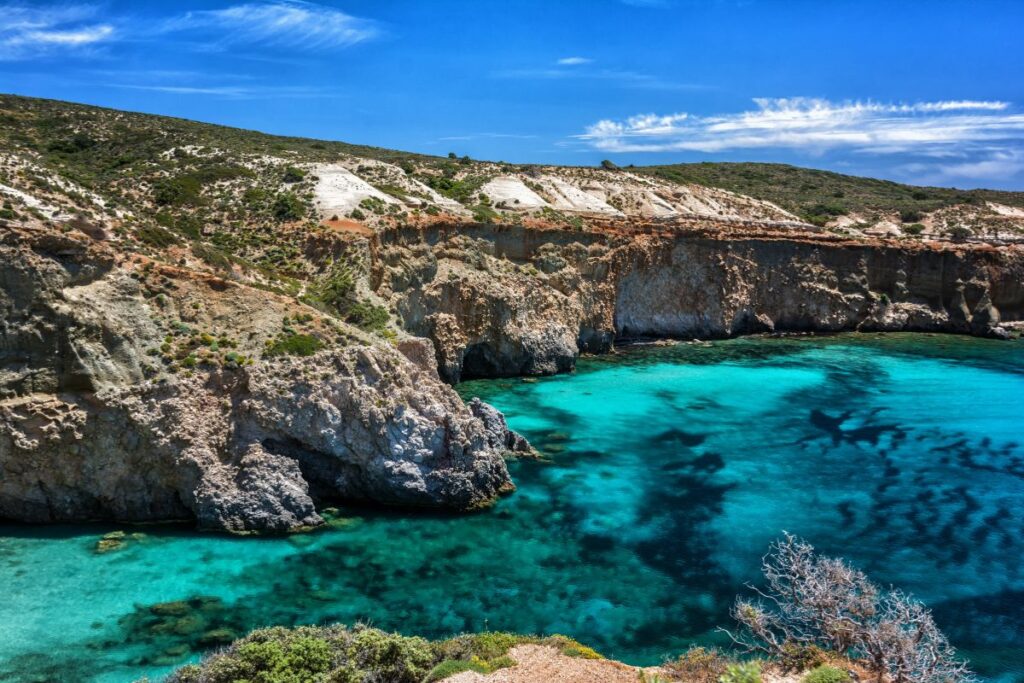
Getting down to Tsigrado involves a rope and a short ladder, and that’s half the experience. The ladder has been restored after repairs in recent years, making it accessible again. Once you’re down, you’ll find a secluded cove with shallow, incredibly clear water and almost no crowd because most casual visitors don’t bother with the descent. Bring your own snacks and water. No facilities down here.
Firiplaka (also spelt Fyriplaka)
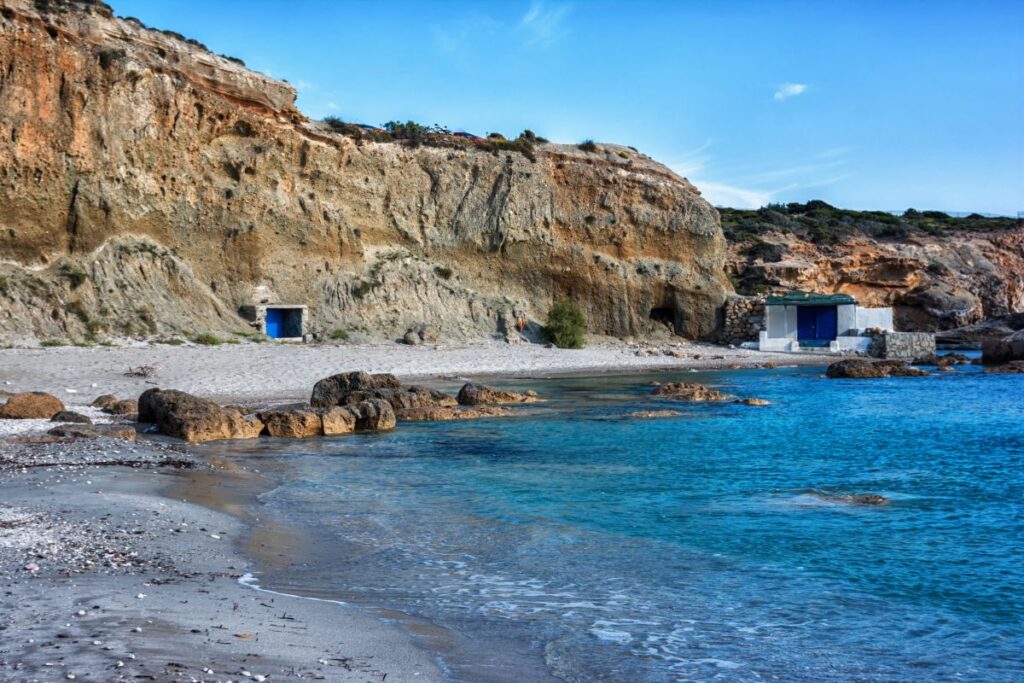
The most organized beach on the south coast. Flanked by red and yellow volcanic cliffs, Firiplaka has sunbeds, umbrellas, a beach bar, and water sports. It’s one of the few Milos beaches where you can just show up, settle in, and spend a full lazy day without planning around it. The nearby beach of Tsigrado is a 10-minute walk, making the two an easy combination for a full afternoon.
Paleochori
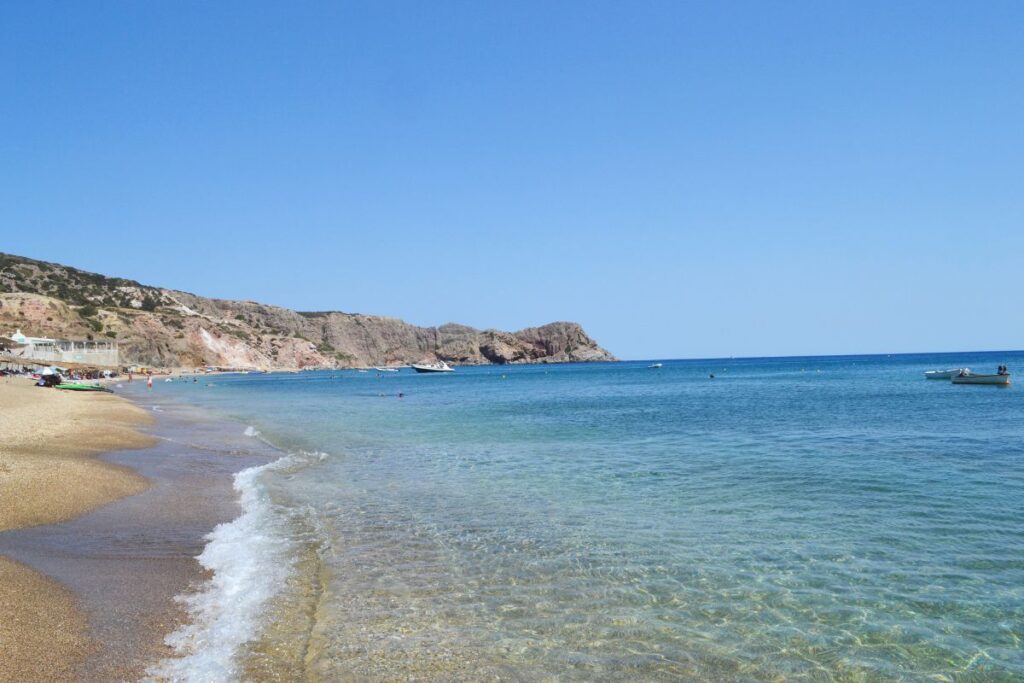
The southeast coast. The volcanic sand here is geothermally heated from below, which is a strange and wonderful thing to discover by sitting down. Good snorkeling, organized facilities, and a few good tavernas within walking distance.
Papafragas
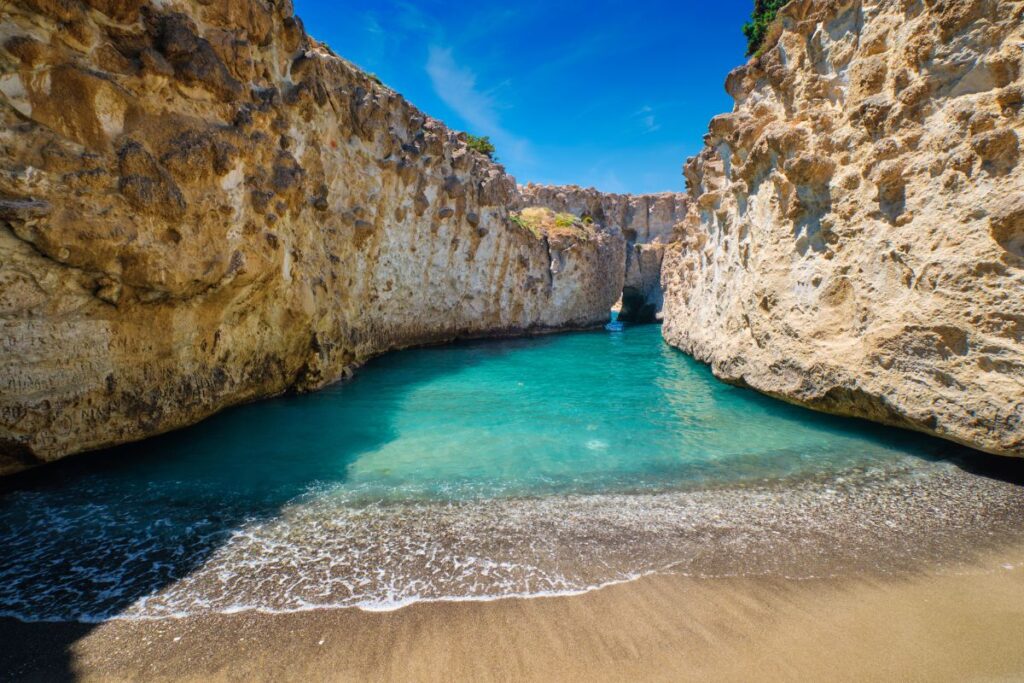
Three natural rock tunnels open out to a long, narrow sea pool surrounded by white cliffs. It’s less a beach and more an outdoor swimming pool built by geology. Located near Sarakiniko, so easy to combine the two into a half-day on the north coast.
Milos Beach Quick-Reference Guide
| Beach | Best For | Access | Facilities |
|---|---|---|---|
| Sarakiniko | Photography, unique landscapes | Car, on foot | None (bring everything) |
| Kleftiko | Snorkelling, sea caves | Boat tour only | None |
| Tsigrado | Seclusion, snorkelling | Car + rope/ladder | None |
| Firiplaka | Families, full beach days | Car | Sunbeds, bar, water sports |
| Paleochori | Geothermal experience, snorkelling | Car | Organised with tavernas nearby |
| Papafragas | Rock swimming pools, unique scenery | Car, short walk | None |
| Plathiena | Calm, sheltered swimming | Car | Limited |
Where Should You Stay and Eat in Milos?
Where to Stay
Milos has three main bases, and your choice here shapes your whole trip.
Adamas is the port town: convenient for ferries, lively waterfront, widest choice of accommodation at every price point. If it’s your first visit and logistics matter, start here.
Plaka, the whitewashed hilltop capital about 5km north of the port, is all narrow alleys, blue-shuttered houses, and sunset views from the ruined Venetian castle at the top. Walking around Plaka at golden hour is one of those free, unplanned experiences that stays with you. Most boutique hotels here book out fast in summer.
Pollonia, on the quieter northeast coast, is where many repeat visitors end up. It’s a working fishing village with a low-key seafront restaurant strip, good ferry connections to neighboring Kimolos for a day trip, and a pace that makes it easy to genuinely slow down. Many travelers who’ve been to Milos more than once prefer Pollonia as their base.
One specific accommodation type worth knowing about: the traditional syrmata houses, the colorful converted boathouses in Klima and Mandrakia with living quarters above and the water lapping just outside. These book out months in advance. If one of these appeals to you, don’t wait.
Where to Eat
Milos punches above its weight in the food department. Here are the places worth planning around:
Medusa, Mandrakia: The classic choice for authentic Milos seafood. Tables sit right at the water’s edge while fishing boats rock nearby. Order the octopus and the fried zucchini chips. Arrive before 7pm or expect to wait.
Sirocco, Paleochori: The concept alone is worth the trip: food cooked buried in volcanic sand using the beach’s natural geothermal heat. It’s pricier than a standard taverna, but there is genuinely nowhere else in Greece where you eat quite like this. The lamb and fish are the picks.
Enalion, Pollonia: The best seafood restaurant on the Pollonia waterfront. Known for the stewed octopus with honey and Santorini wine and, when in season, sea urchin pasta. Book ahead.
Okto, Trypiti: Two chefs from Michelin-starred kitchens, a terrace with sweeping views, and a menu that takes local ingredients seriously. This is the most polished dining experience on the island. Reservations are essential and fill up weeks in advance in peak season.
O! Hamos, Adamas: Family-owned, ingredients from their own farm, clay-pot baked vegetables and grilled meats that taste the way Greek food is supposed to taste. There’s usually a wait, but the line moves.
Avli, Plaka: A small, covered rock taverna tucked into Plaka’s alleys. The ouzo spaghetti is not something you’ll find anywhere else. Book ahead for dinner.
Local dishes to try: pitarakia (hand pies with local cheese and herbs), shrimp saganaki, sun-dried octopus in vinegar, Milos cheeses, and fresh grilled fish bought the same day it came out of the water.
How Do You Get Around Milos?
The best way to get around Milos is by rental car or ATV. Public buses connect the main towns and some beaches in summer, but routes are limited and schedules don’t always align with the beaches you want to reach. Taxis exist but are scarce and should be pre-booked. A rental car gives you the freedom to reach remote beaches, hit Sarakiniko at sunrise, and cover the island’s wider geography without depending on anyone else’s timetable.
A rental car is also safer on Milos’s main roads than an ATV. The main connecting roads see truck traffic and can be rough in spots, so if you’re less confident on two wheels, the car is the better call. Note that Greece requires an International Driving Permit alongside your home license for most rental companies in the Cyclades. Sort this out before you leave home.
ATVs and scooters are popular and completely manageable if you’re comfortable riding them. The island is bigger than it looks on a map, so check how far your planned beaches are from your accommodation before you decide.
For Kleftiko and the island’s sea caves, you’ll need a boat tour regardless of how you’re getting around otherwise. Book half-day or full-day tours from Adamas, confirm the night before given weather, and bring motion sickness tablets if you’re prone.
A short ferry from Pollonia takes you to Kimolos, the tiny neighboring island. It runs several times a day in season and makes for a genuinely easy and rewarding day trip.
Essential Tips for Visiting Milos in 2026
A few things that separate a smooth Milos trip from a frustrating one:
Book earlier than you think you need to. Syrmata houses and boutique hotels in Plaka go months ahead. Popular restaurants like Okto and Medusa fill up weeks out in peak season. If you’re visiting between June and September, treat your accommodation and restaurant reservations as seriously as you’d treat your flights.
Bring what you need to the beach. Remote beaches like Sarakiniko, Papafragas, and Tsigrado have zero facilities. Water, sunscreen, snacks, a hat, and sandals that handle rock terrain. Sarakiniko in particular has no shade at all. Underestimating the sun on white volcanic rock is a common mistake.
Watch the wind before booking boat tours. The Meltemi blows strongest in July and August, especially on north-facing coasts. Boat tours to Kleftiko can be canceled or rerouted on choppy days. Build a buffer day into your schedule if this trip is one of the reasons you’re visiting.
Cash matters at smaller spots. Most hotels and larger restaurants take cards. Smaller tavernas, local shops, and some beach bars still prefer cash. There are ATMs in Adamas, Plaka, and Pollonia.
The emergency number across Greece is 112. Works for police, ambulance, and coastguard.
Plan your Greece itinerary beyond Milos. Milos is a natural base for island hopping. Kimolos is a day trip from Pollonia. Folegandros and Sifnos are both accessible by ferry and both excellent. And if you’re heading to Greece in 2026, our complete 2026 travel bucket list is worth a read before you finalize your route.
Working with a travel advisor at Crystalista Travels means your accommodation, boat tour bookings, restaurant reservations, and ferry logistics are handled before you land. Milos rewards travelers who plan with intention. If you’re also considering a group trip to the Cyclades, our guide to planning a group trip walks through exactly how to make that work.
Milos Belongs on Your Greece Itinerary
Three things to take away from this guide. First: go in May, June, or September if you can. You’ll get the best of the island without fighting for it. Second: rent a car or ATV and use it. Remote beaches are where the magic is, and public buses won’t get you there. Third: book your accommodation, your restaurants, and your boat tours before you arrive, not after.
Milos isn’t a secret anymore, but it hasn’t lost what makes it worth going. The beaches are still extraordinary. The fishing villages are still genuine. The food is still made from whatever came off the boat that morning.
Ready to make it happen? The team at Crystalista Travels specializes in building custom Greek island itineraries that cover every detail from first ferry to last dinner. Book your free consultation today and let’s start putting your Milos trip together.
Frequently Asked Questions
What is the best time to visit Milos, Greece?
The best time to visit Milos is during the shoulder seasons: May to June or September to October. These months offer warm temperatures between 19°C and 25°C (66°F to 77°F), swimmable water, and far fewer crowds than the July-August peak. Prices are also lower and accommodation is easier to book. July and August guarantee the hottest weather and the liveliest atmosphere, but come with higher prices, busier beaches, and stronger Meltemi winds that can disrupt boat tours.
How do you get to Milos from Athens?
You can fly or take a ferry. The flight from Athens to Milos Airport takes about 40 minutes and runs on Sky Express and Olympic/Aegean, especially in summer. Ferries leave from Piraeus port and take between 2.5 hours on a high-speed vessel and up to 7 hours on a conventional ferry. Book ferry tickets through Ferryhopper, which lists all routes and operators. If your international flight arrives in Athens the night before, consider staying overnight in Athens rather than rushing a same-day connection.
What are the must-see beaches in Milos, Greece?
The four beaches you should prioritize are Sarakiniko (the famous white volcanic moonscape, best at sunrise), Kleftiko (sea caves and turquoise water, accessible by boat tour only), Tsigrado (a secluded cove reached by rope and ladder), and Firiplaka (long, sandy, family-friendly with striking red cliffs). For something different, Paleochori has geothermally heated sand and good snorkeling, and Papafragas offers natural rock swimming pools carved by geology.
Is Milos more expensive than other Greek islands?
Milos is more affordable than Santorini or Mykonos, but it isn’t a budget destination, particularly in July and August when accommodation prices peak across the Cyclades. Shoulder season travel in May, June, or September brings noticeably better value. Food is generally well-priced at local tavernas. The most expensive experiences are higher-end restaurants like Okto and organized boat tours to Kleftiko, both of which are worth budgeting for.
How many days do you need in Milos?
Most travellers who give Milos a proper visit spend four to five days on the island. Three days is the minimum to cover the main beaches and see the fishing villages without feeling rushed. Five to six days allows time for a day trip to Kimolos, a full boat tour to Kleftiko, exploring Plaka at sunset, and a slow dinner in Pollonia without cramming everything in. If you’re combining Milos with other Cycladic islands, four nights gives you the right balance.